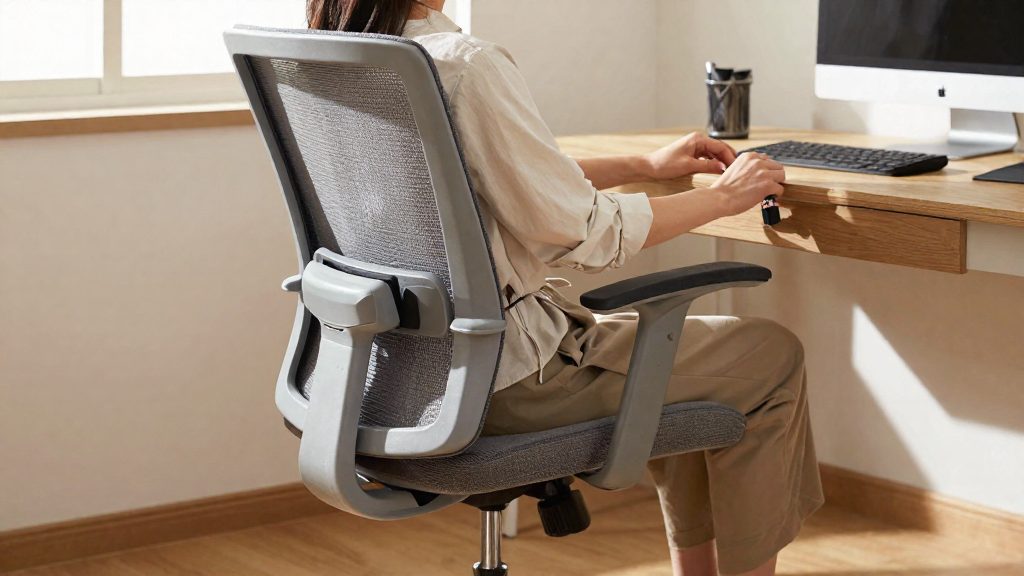
Best Chair Lumbar Support for Long Sitting Hours: Fit Guide
Check lumbar support height, protrusion and contact area to pick the right chair for long sitting hours, with a step-by-step fit test you can do at home.
Sit better, work longer, hurt less.
Ergositup
Practical advice to improve your posture, prevent back pain and set up a healthy workstation, at the office or working from home.
Check lumbar support height, protrusion and contact area to pick the right chair for long sitting hours, with a step-by-step fit test you can do at home.
Find the correct laptop height to ease neck pain at your desk. Learn why low screens strain your neck and how to raise yours to eye level.
Standard chairs often start at 17 inches, too high under 5 ft 6 in. Learn the minimum seat height to check before buying an ergonomic chair.
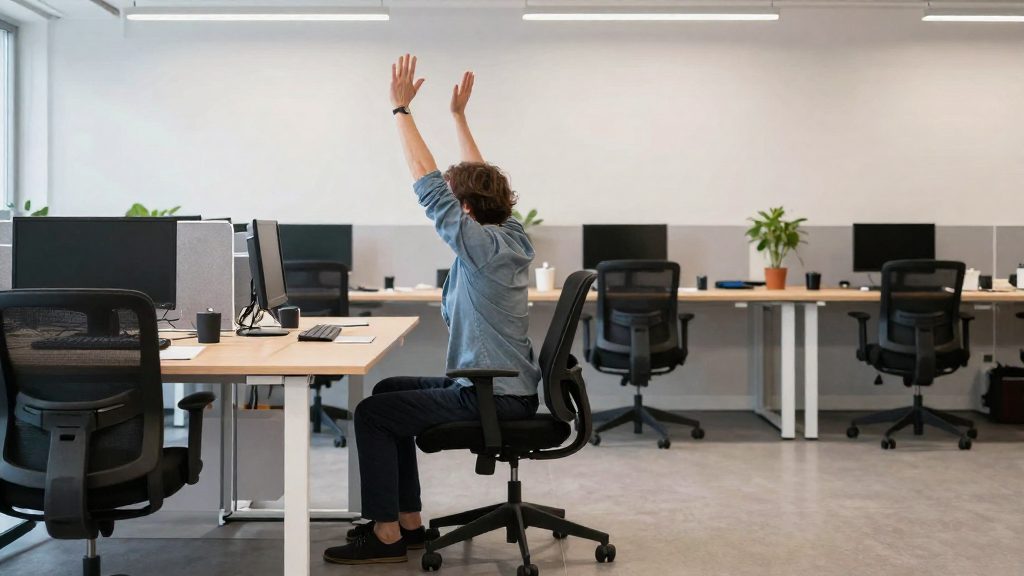
Practical employee stress reduction ideas in the office, linking workload, posture and workspace setup, based on CDC/NIOSH and OSHA guidance.

Reduce wrist strain at your desk: learn how keyboard height, mouse position and forearm support keep your wrists in a neutral position during daily work.

Working from the couch strains your spine when it becomes daily. Learn why laptops on your lap cause neck and back pain, and how to set up safer.

Raise your keyboard without replacing your desk. Compare three retrofit options for tall users, plus standing desk height ranges from 22 to 55 inches.

Targeted shoulder exercises that relieve desk-related tension, plus posture and workstation adjustments to reduce static load and forward head posture.
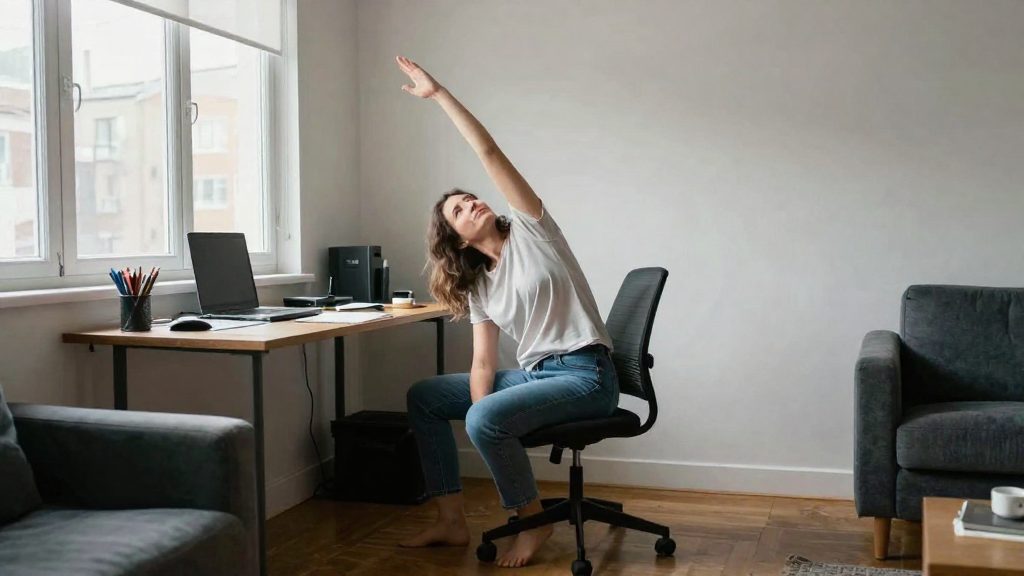
Discover zero-cost wellness activities you can do during the workday at home: no subscription, no equipment, no travel. Start these simple pauses today.
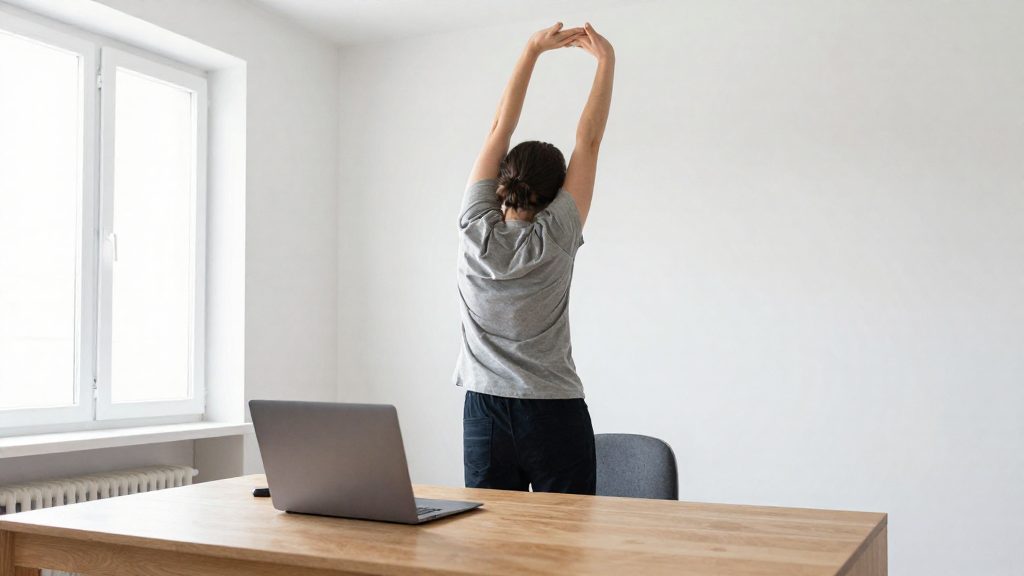
Stand or move every 30 minutes at work. Studies show frequent 1–2 minute breaks cut sedentary time by about 36 minutes a day. Learn how to set your schedule.
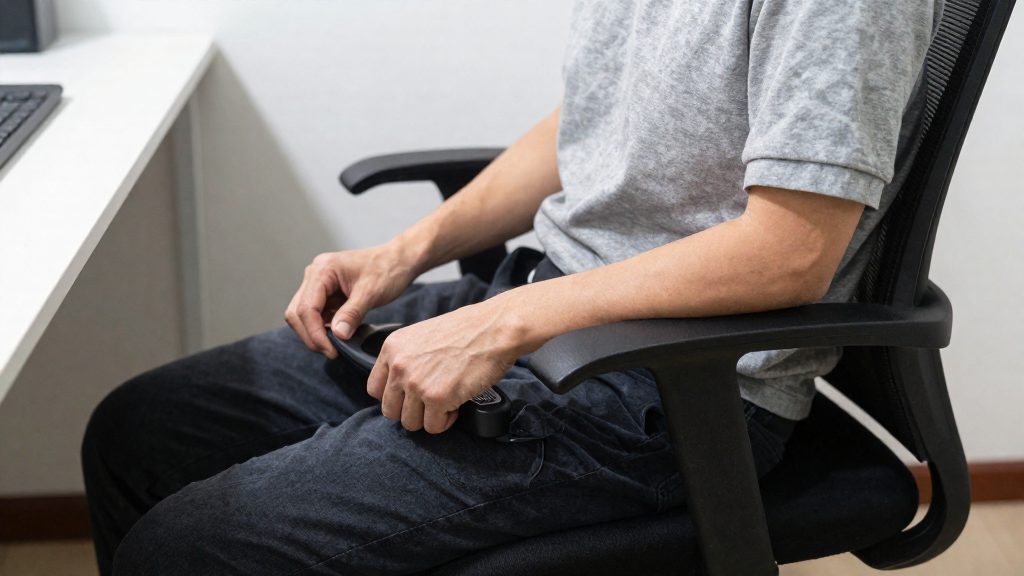
Learn how to set office chair armrest height to reduce shoulder and neck strain. Follow the elbow-at-90-degrees method for a neutral, comfortable desk position.
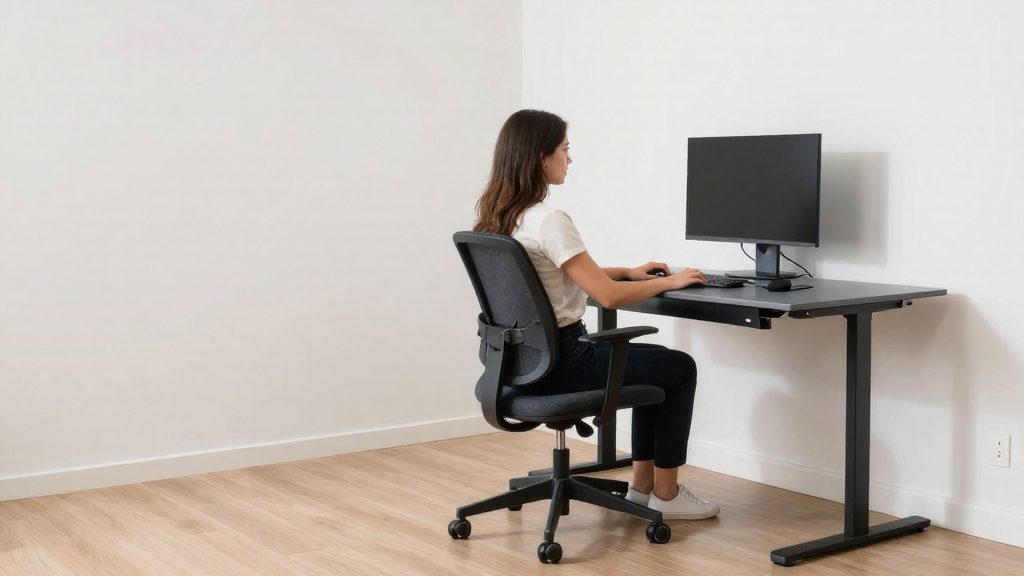
Arrange your home office like a campus workstation. Learn how to avoid awkward postures and repetitive strain with the equipment you already own.
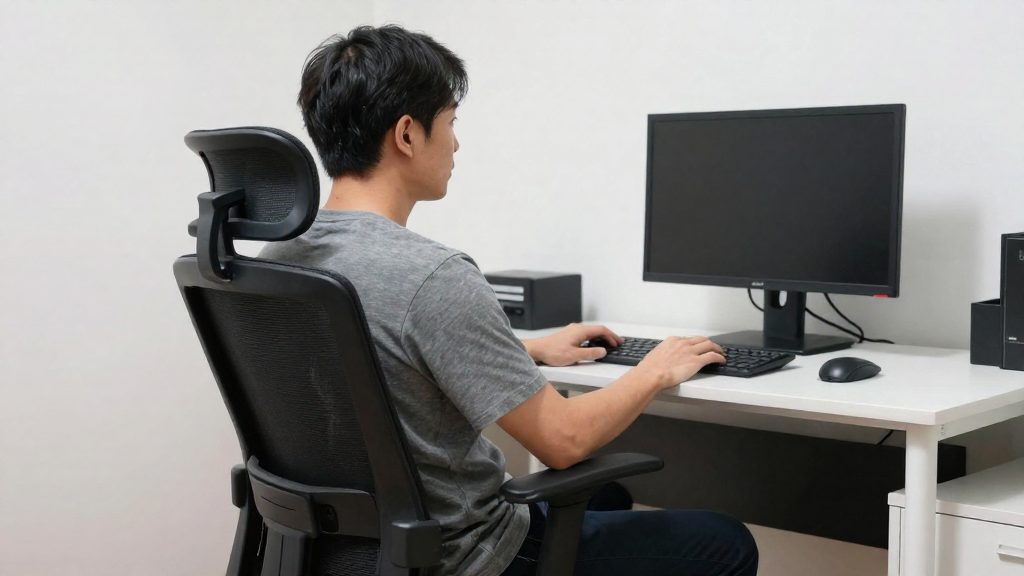
Find out why forward head posture strains your neck, how to check your alignment, and desk adjustments that keep your ears over your shoulders.